

Convert a PDF drawing to STEP, checked against the approved spec.
TruePart converts a native vector PDF drawing to STEP: it reads what the drawing states, asks for the rest, and exports STEP and STL from one B-rep solid measured against the approved specification. The Technical Preview reads native vector PDFs of one part on one sheet and builds one part family: rectangular plates with a centered bore and a hole pattern. AI interpretation is not enabled. A scanned PDF is stopped, not guessed at.
Technical Preview · one part family live, complex drawings in development · Current public demo: deterministic drawing reader · AI-assisted interpretation: in evaluation, not yet enabled · the demo uses a synthetic drawing
- 9 requirements read from the demo drawing
- 8 questions asked instead of a guess
- 17 text runs kept with their positions
From PDF to STEP
Native vector PDF
PDF
The PDF is hashed, its page rendered, and its native text kept with exact positions. Vector and scanned PDFs are told apart; scanned or multi-sheet drawings are stopped, not guessed at.
drawing.pdf · 1 page · vector

- Page
- 842 × 595 pt
- Text runs
- 17
- sha256
- 1da4986dab3eafb0…
Read or asked
Requirements
Readable callouts and title-block fields become requirements linked to their place on the page. Bare or unclear values become questions, and you approve the specification before any geometry exists.
Requirements · 9 read · 8 asked
- Units
- mmread
- Material
- 6061-T6 ALUMINUMread
- General tol.
- ISO 2768-mread
- Bore
- Ø12 ±0.05read
What is the overall width of the plate? The drawing shows bare dimensions that the reader could not attribute.
askedanswered 80 mm
Deterministic solid
B-rep
A typed plan is executed by the CAD engine into a B-rep solid, then measured: envelope, volume, hole count, and each hole’s position and diameter.
B-rep solid · 1 solid · 17 faces
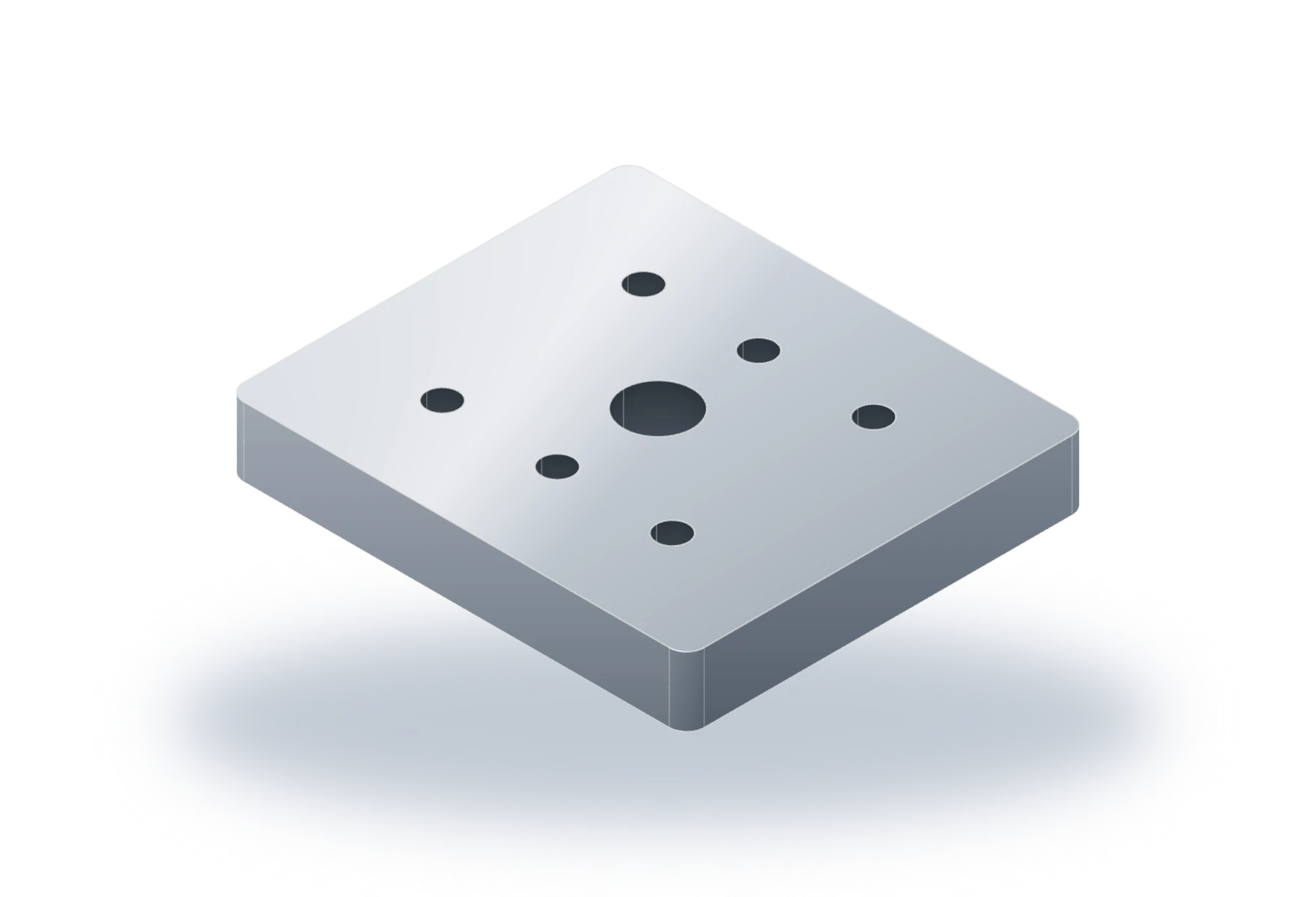
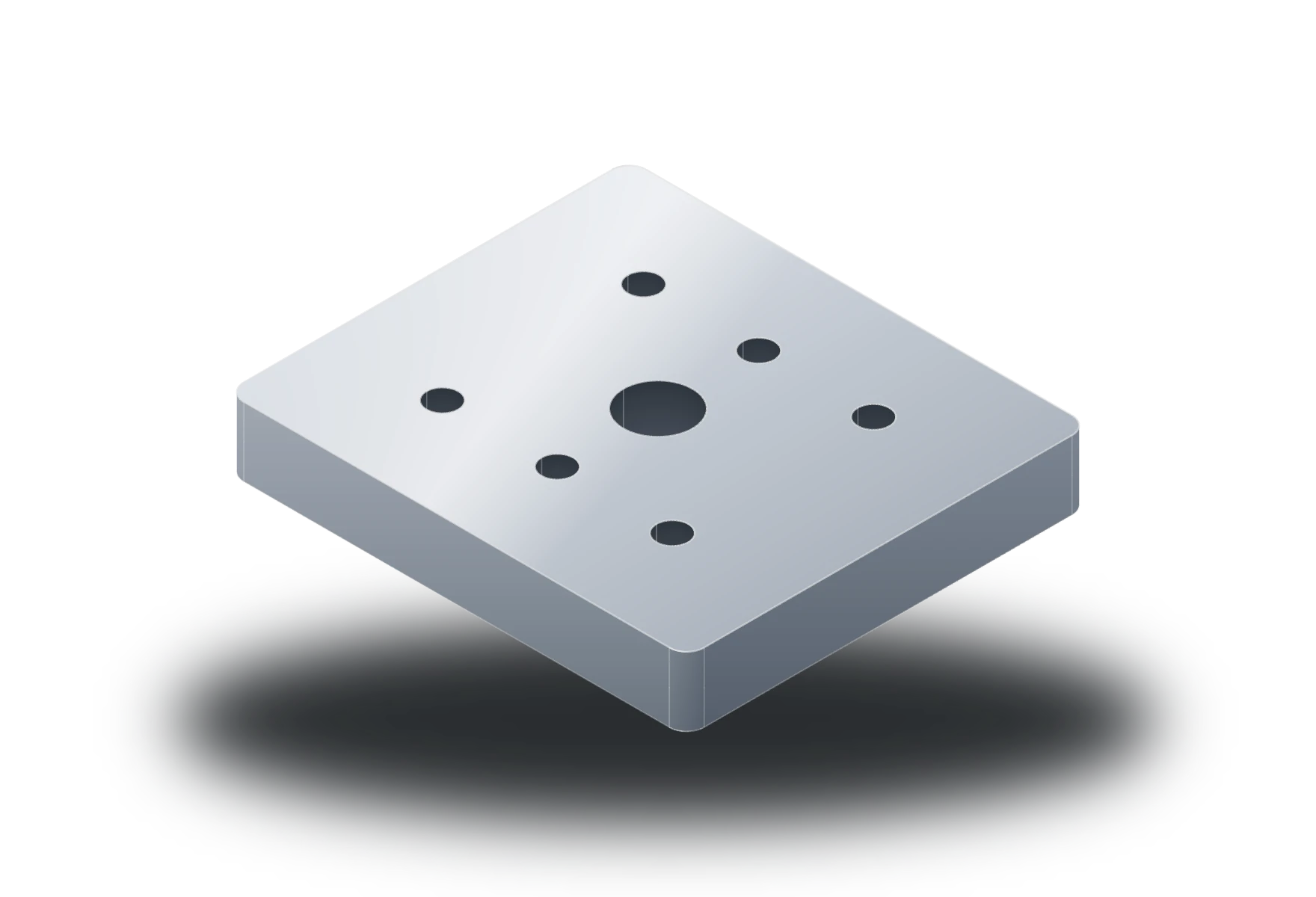
Envelope · 80 × 70 × 12 mm
Export · STEP and STL
STEP
STEP for CAD and CAM, STL for printing, both exported from that one verified solid, in millimetres.
part.step · exact B-rep
The exact B-rep solid as STEP, and a mesh of it as STL, exported once the solid is measured against the specification. The files are downloaded in the workspace.
A PDF is a picture of a part, not a model.
A drawing PDF holds views, lines and text. Getting a STEP out of it has meant remodeling the part from those views.
| By hand | In TruePart | |
|---|---|---|
| Input | A scanned page and a vector page look the same on screen. | The PDF’s content kind is checked first. A scanned or multi-sheet PDF is stopped, not guessed at. |
| Source | A STEP sent to a shop rarely says which revision of which PDF it came from. | The source PDF is hashed, and every requirement links to its place on the page. |
| Values | Bare dimensions are attributed by eye, and a wrong guess is invisible in the model. | A value the reader cannot attribute becomes a question you answer before any geometry exists. |
| Output | A converted mesh is an approximation that CAD and CAM tools cannot edit as a solid. | The STEP is an exact B-rep solid, measured against the specification before export. The STL is a mesh of that same solid. |
A PDF rarely says everything.
Bare dimensions and positions shown only by centerlines are not attributed to a feature, so TruePart asks for them. From the demo PDF:
What is the overall width of the plate? The drawing shows bare dimensions that the reader could not attribute.
Why it matters
Sets the plate outline and the bounding-box check.
askedanswered 80 mm
What is the horizontal distance between neighboring hole centers?
Why it matters
Places every hole of the pattern.
askedanswered 20 mm
Where is the hole pattern located? No position dimension is written; the drawing shows centerlines.
Why it matters
Placing the pattern needs its position; deriving it from centerlines needs vector geometry extraction, which is not built yet.
askedanswered centered (symmetric)
What comes out, and how it is checked.
Hashed source
The PDF is hashed and its native text kept with exact positions, so the STEP can be traced to the file it came from.
Questions, not guesses
Bare and unclear values become questions. You approve the specification before any geometry exists.
Exact B-rep STEP
An exact solid that opens in any CAD tool. It carries the geometry, not a feature history; editing parameters inside TruePart is not in this preview.
STL from the same solid
A triangulated mesh of the verified solid, for printing.
Each value in the STEP goes back to the PDF.
The bore of the demo part, from its text on the PDF page to the requirement, the solid’s feature, and the diameter measured on the B-rep.
PDF text
REQ 4 · Ø12 ±0.05 THRU · page 1 at 233, 157 pt
Ø12 ±0.05
Requirement · hole_1_diameter
- Requirement
- read from the drawing · confirmed by the reviewer
- CAD feature
- bore · through bore at the plate center
- Measured
- in the workspace
- Against
- the planned diameter and position
Verification measures the envelope, volume, hole count, and each hole’s position and diameter against the approved specification. It does not check tolerance bands, material or manufacturability, and a misread callout still needs your review.
What is live today, and what is not yet.
If TruePart cannot prove what the drawing means, it asks or stops instead of guessing.
Production-verified
- 01Native vector PDF with a text layer: one sheet, one part, millimetres, up to 10 MB
- 02Diameter callouts with a fit, ± or signed deviation, and THRU; NX hole patterns
- 03Thread (M), radius (R) and chamfer (C) callouts
- 04Title block: material, general tolerance, units
- 05Builds one family: a rectangular plate with one centered through bore and one centered rectangular pattern of through holes; sharp, chamfered or rounded corners
Not live yet
Stated apart from what is live: none of it is offered in this preview.
- 01Implemented, not enabled: a multi-view bracket path. A stepped bracket drawn in several views and a section, taken from a synthetic, company-authored drawing to a STEP file in internal tests, with the readers it uses. Internal only: customers cannot use it.
- 02In development: groundwork for complex part families. Work on open branches, starting with integrity fixes to the internal multi-view path. Each family is to be measured on held-out drawings before it is offered. No held-out results are published yet.
- 03Roadmap: complex part families. Family by family: a bracket or housing block with features on several faces, a turned flange, a stepped shaft and a bearing housing, with sections, diameters and datums read from the drawing. Planned, not built.
Not in this preview
- 01Scanned, raster or multi-sheet drawings (stopped: advanced interpretation required)
- 02Any other part shape: pockets, bosses, counterbores, sheet metal, assemblies (stopped: outside the current scope)
- 03GD&T frames and surface finish (not read yet)
- 04Checks of tolerance bands, material or manufacturability
- 05AI interpretation: built behind TruePart’s provider boundary, not yet run or enabled
- 06Text, photo or sketch input; ordering and quoting
Fifty complex test parts, in our evaluation corpus.
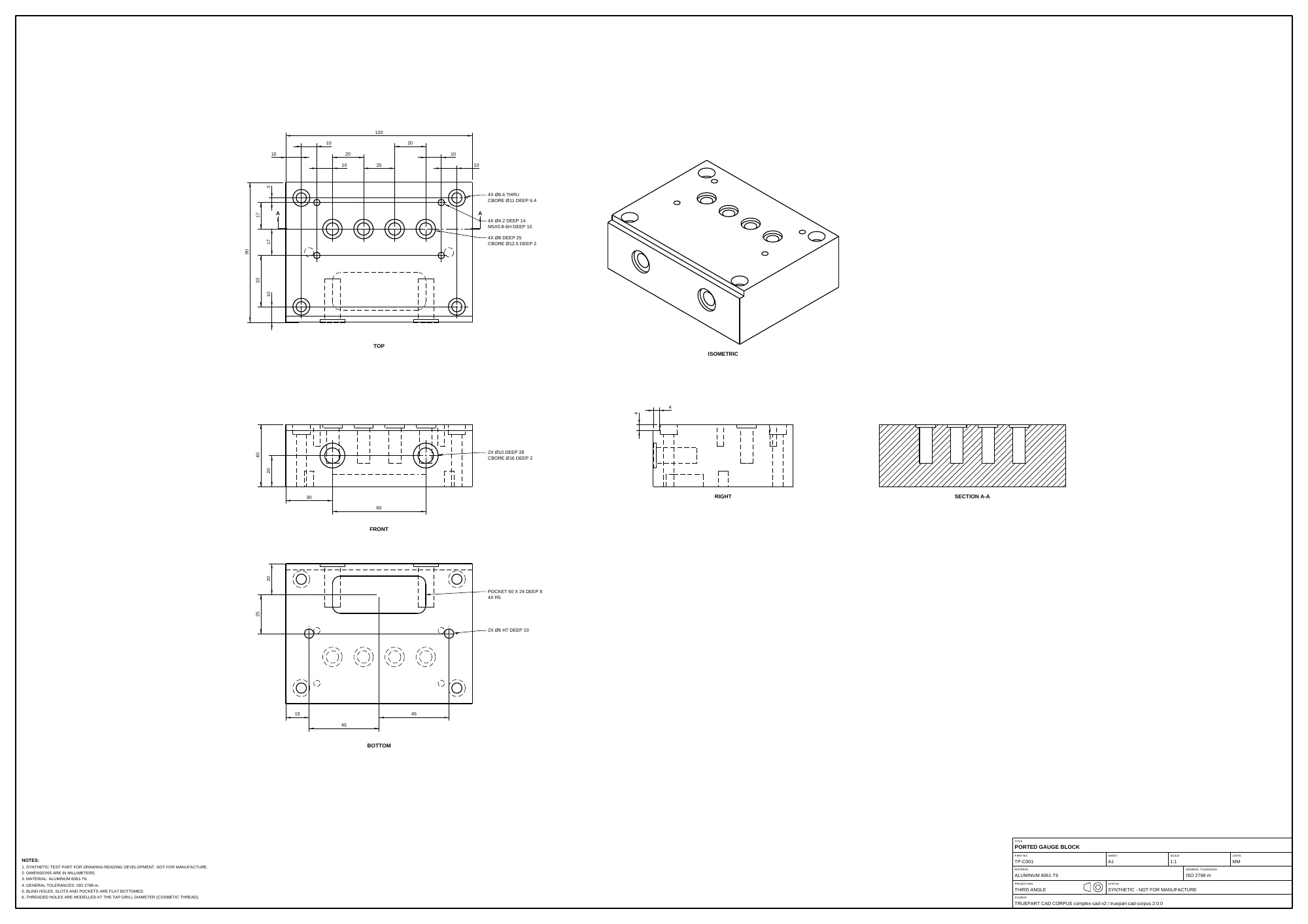
Each part is pictured as its drawing specifies it. Synthetic, company-owned test drawings, marked not for manufacture. None of these parts has been built by TruePart or made in a shop; the live pilot reads one part family today. No results on it are published yet.
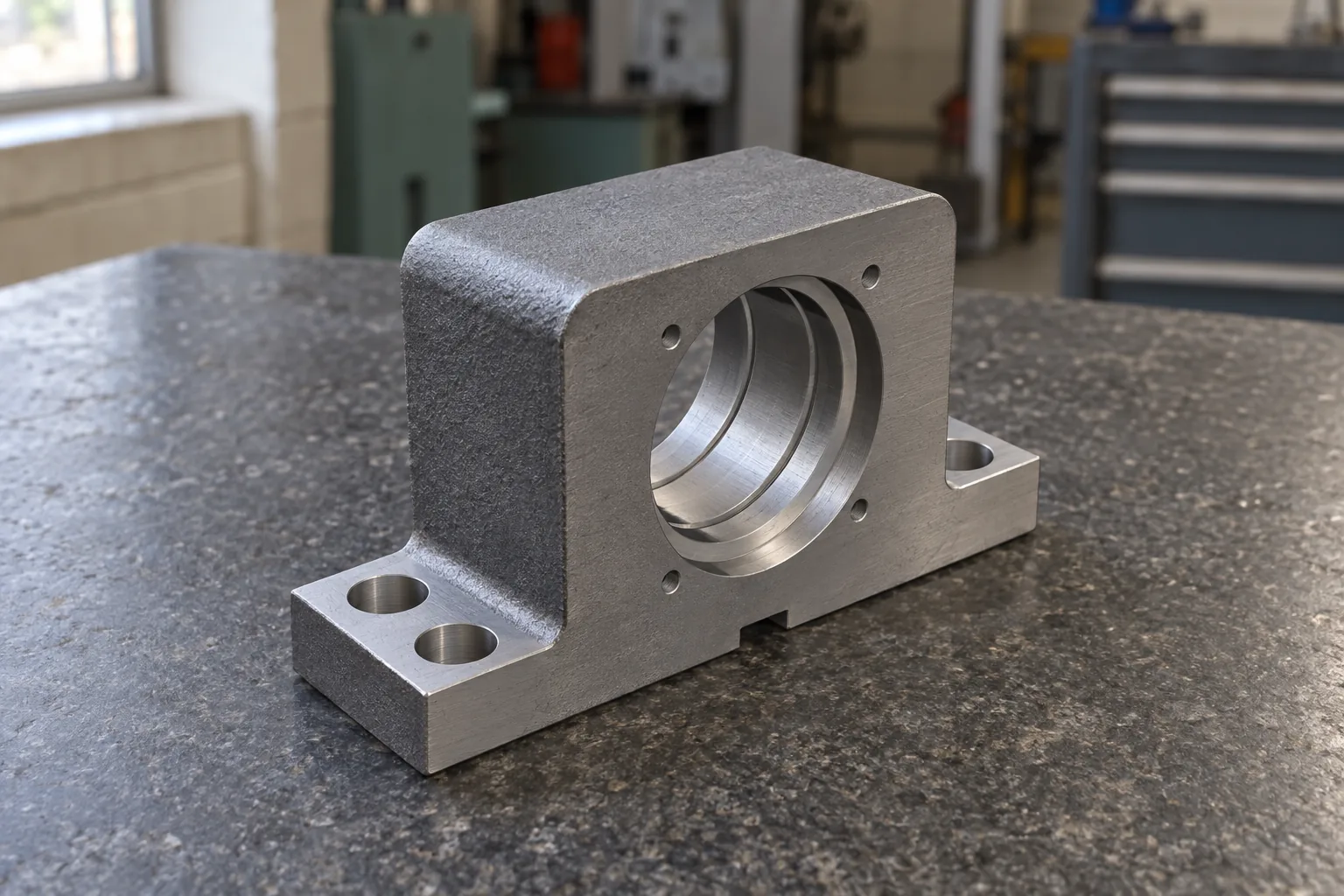
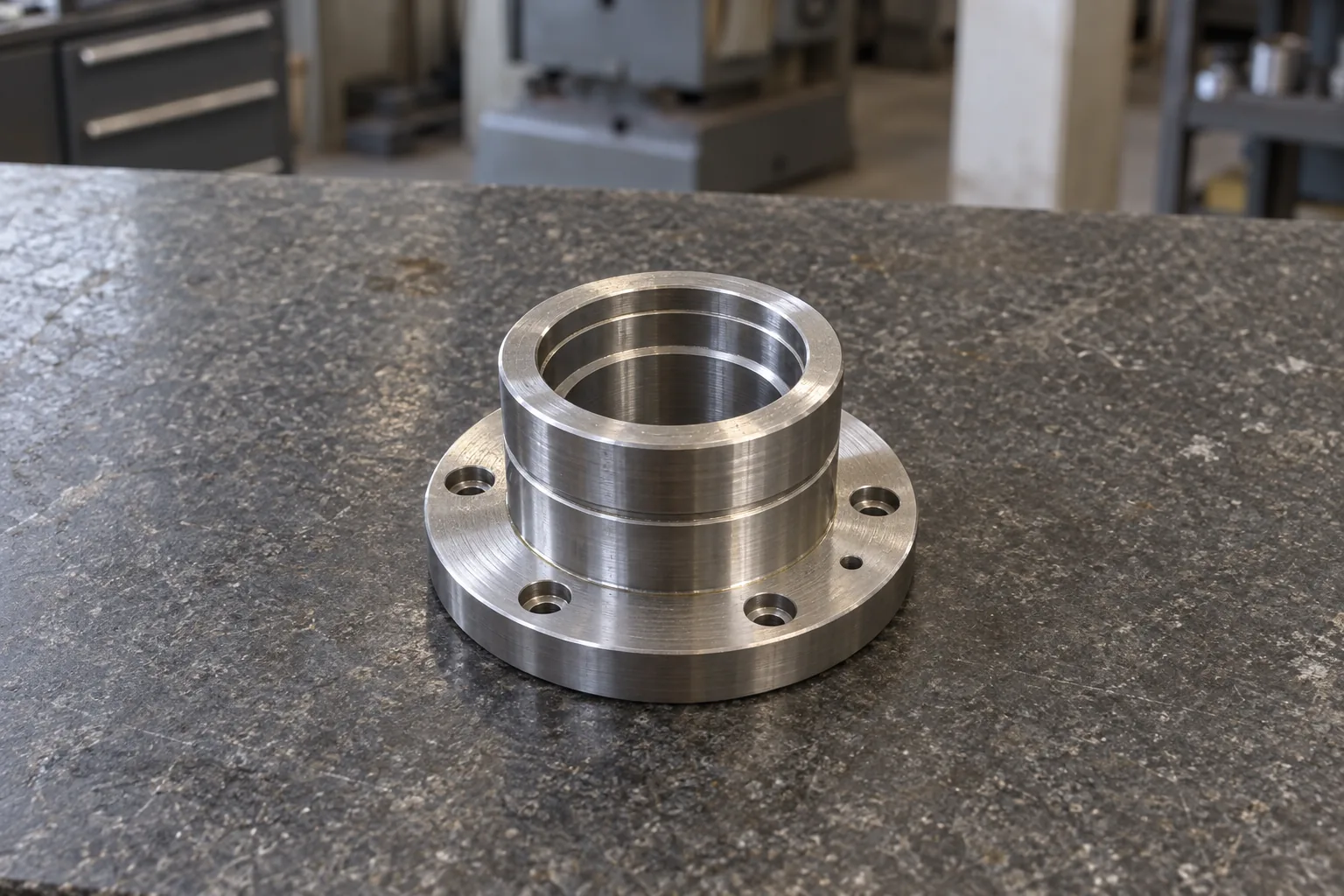
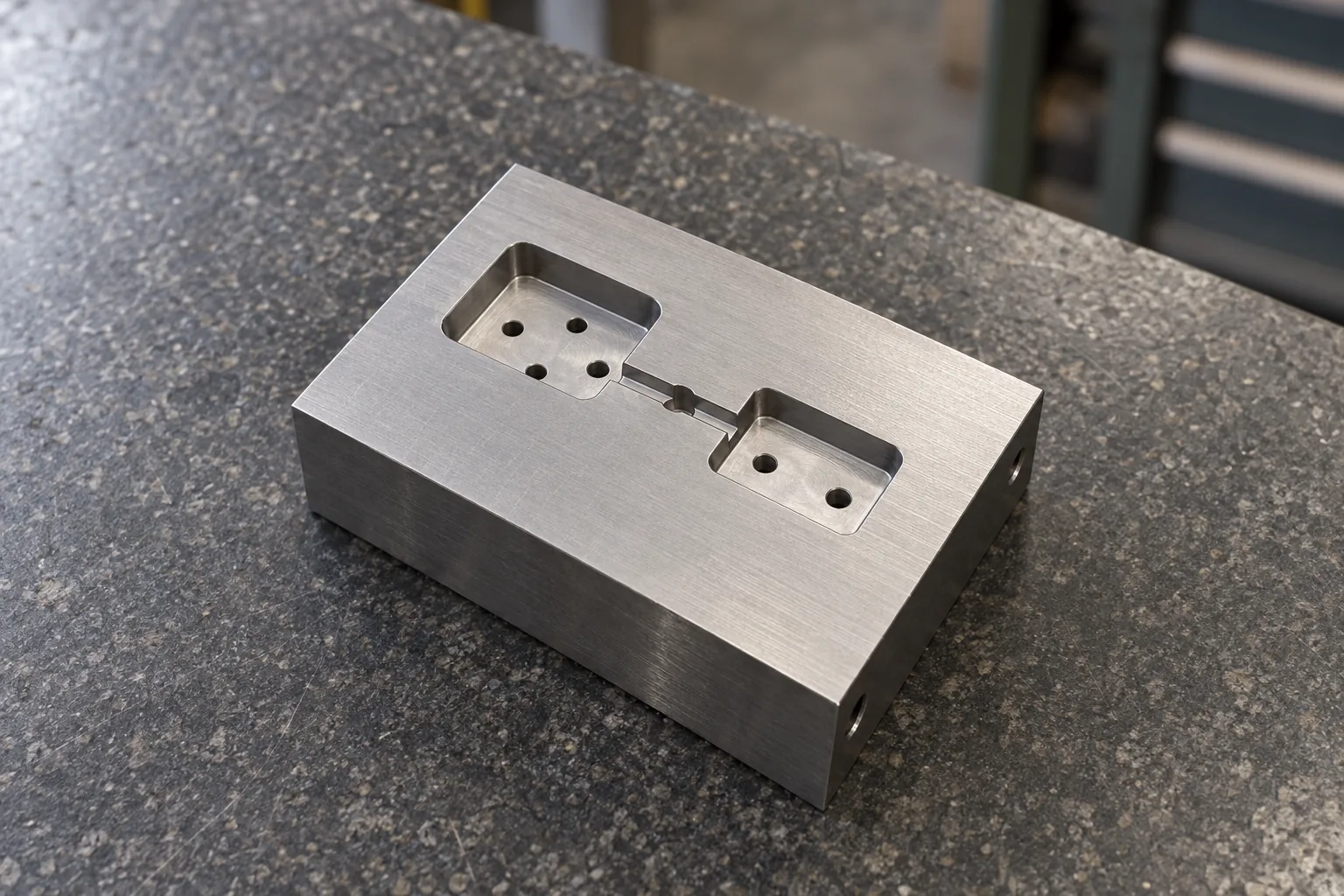
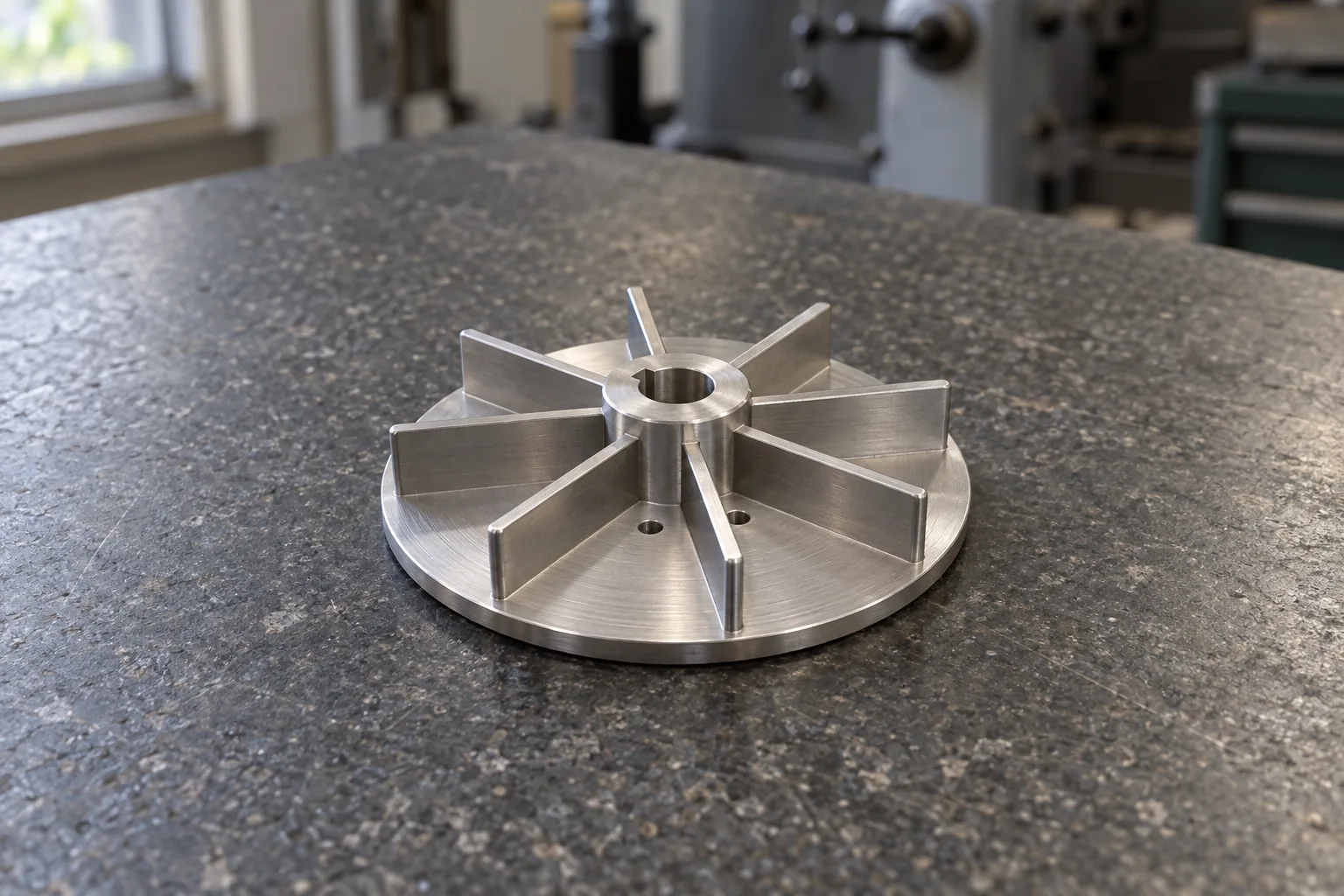
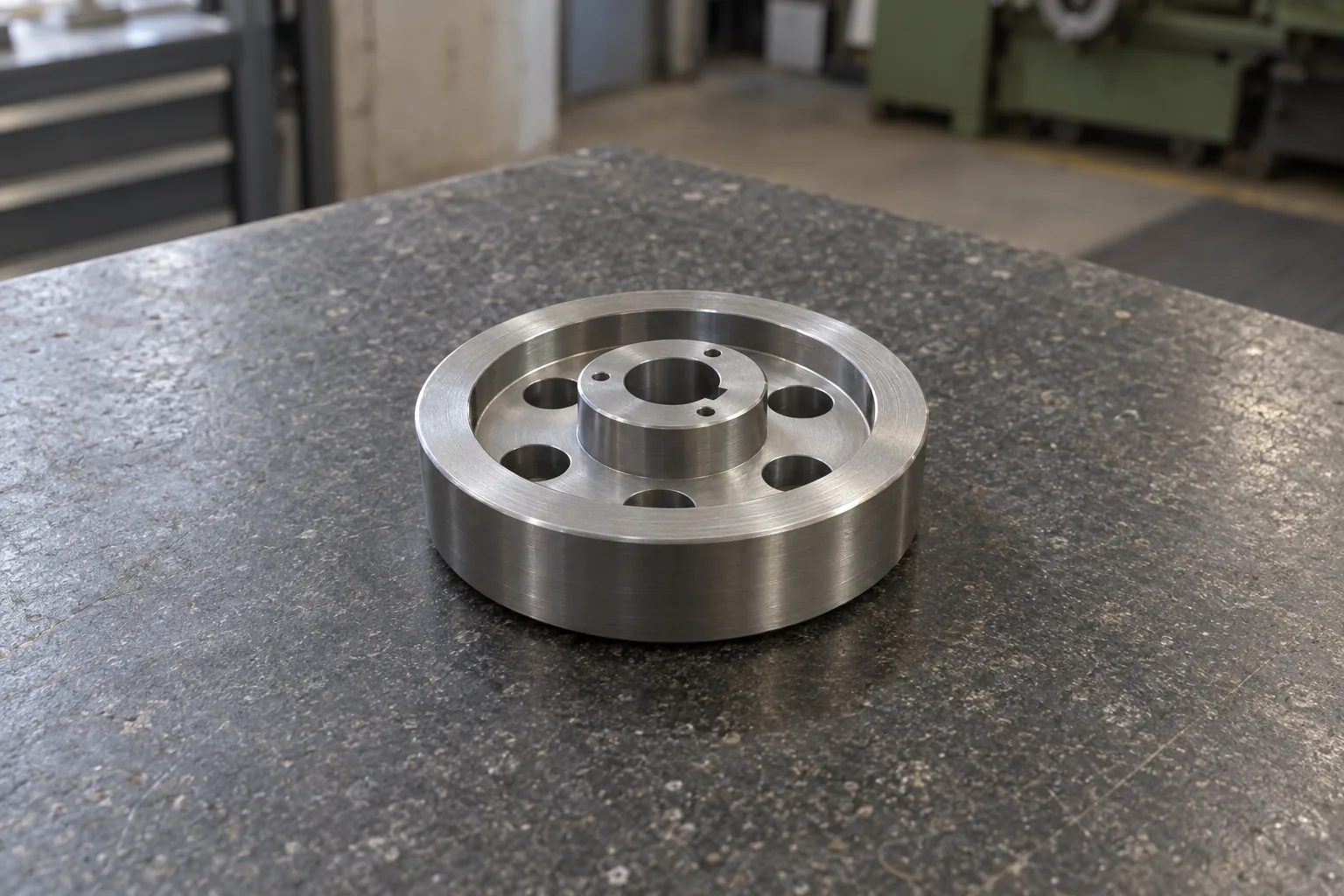
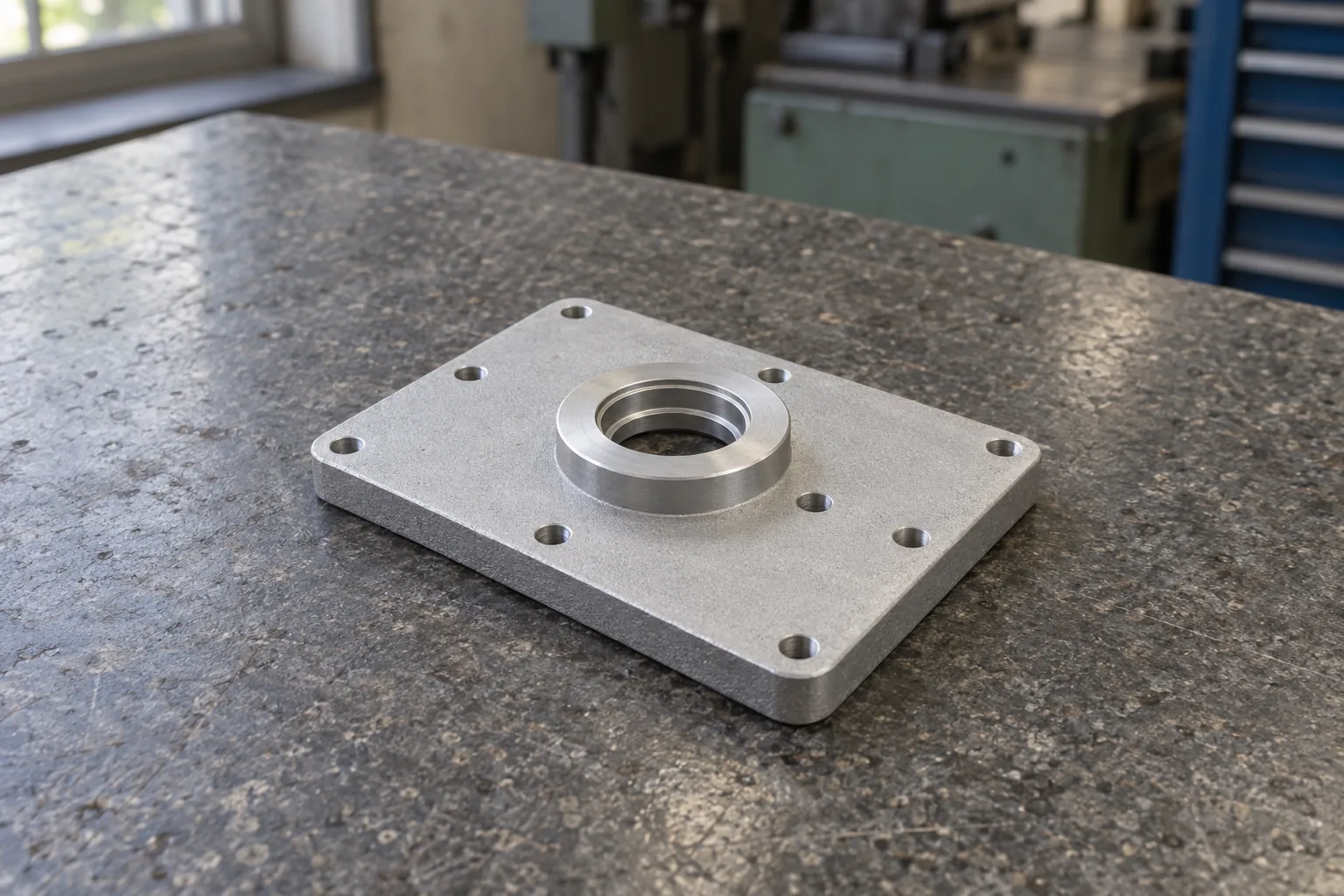
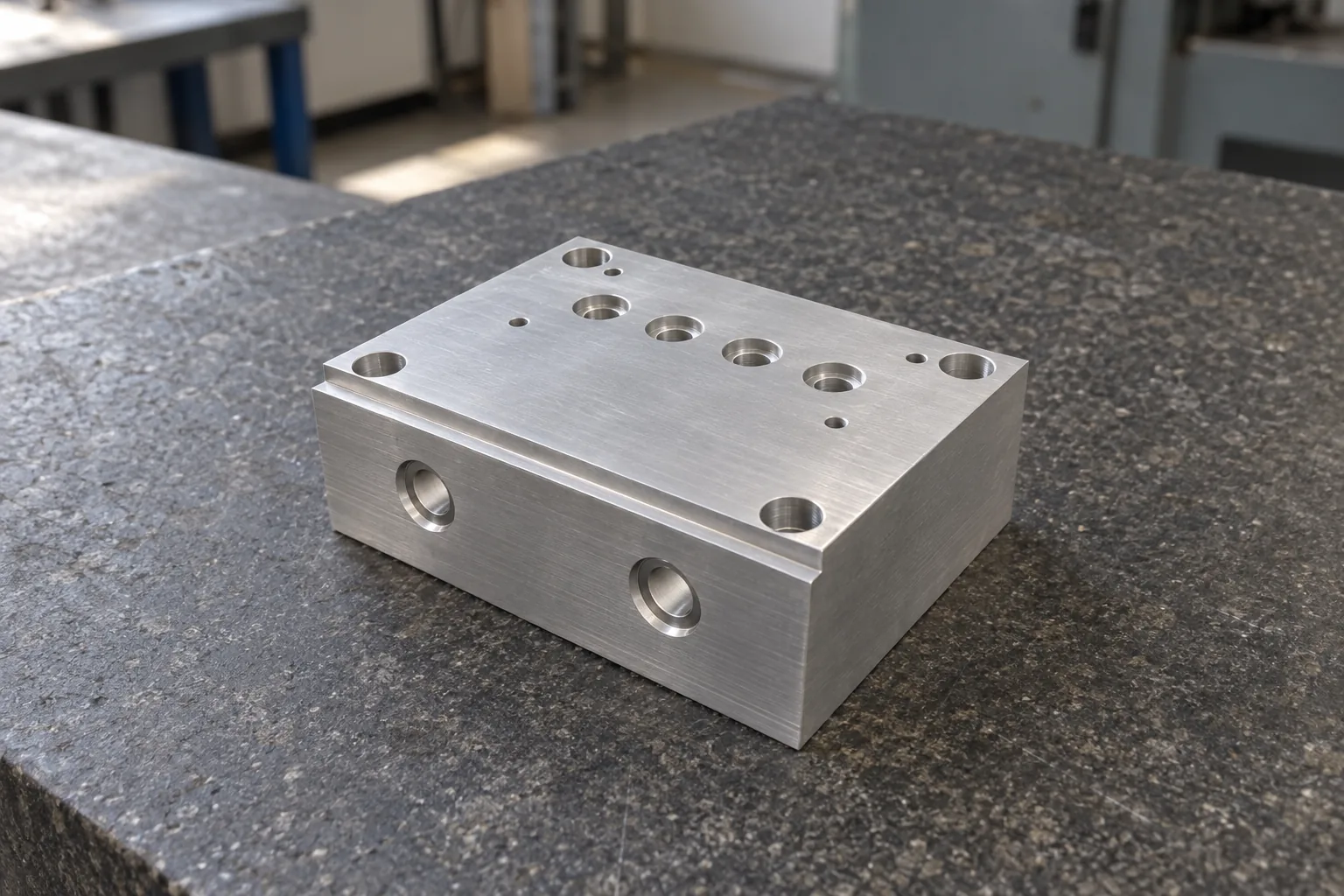
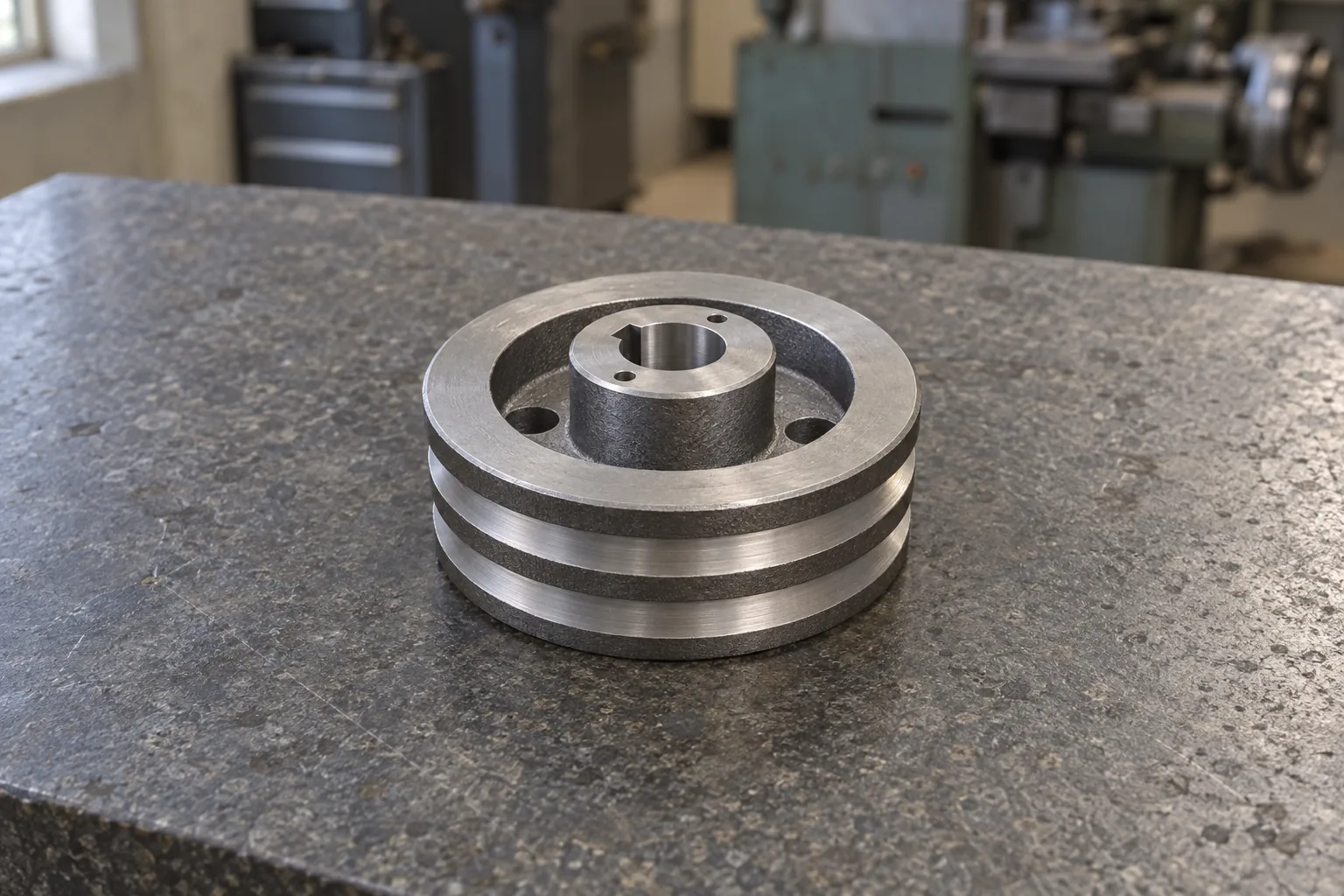
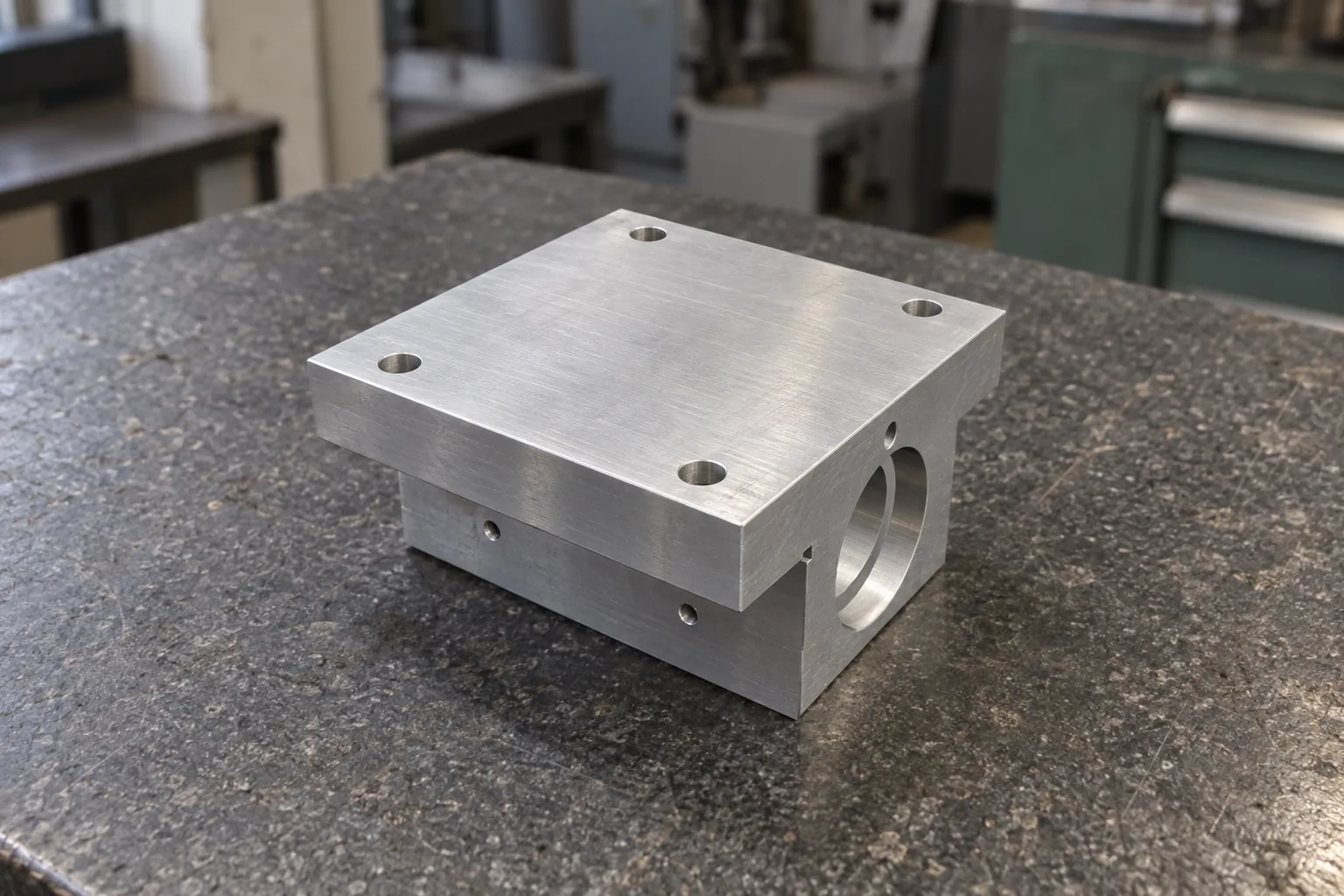
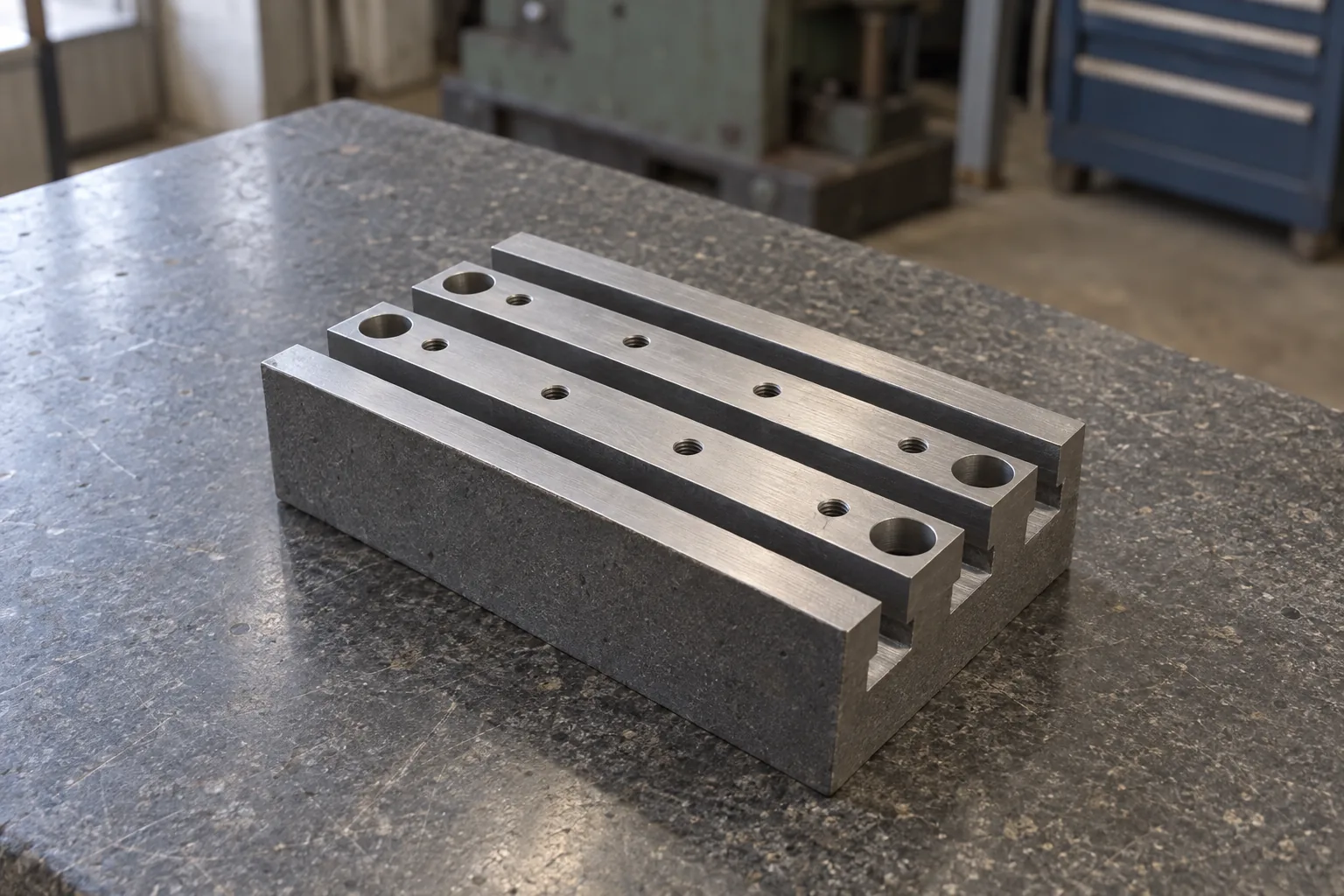
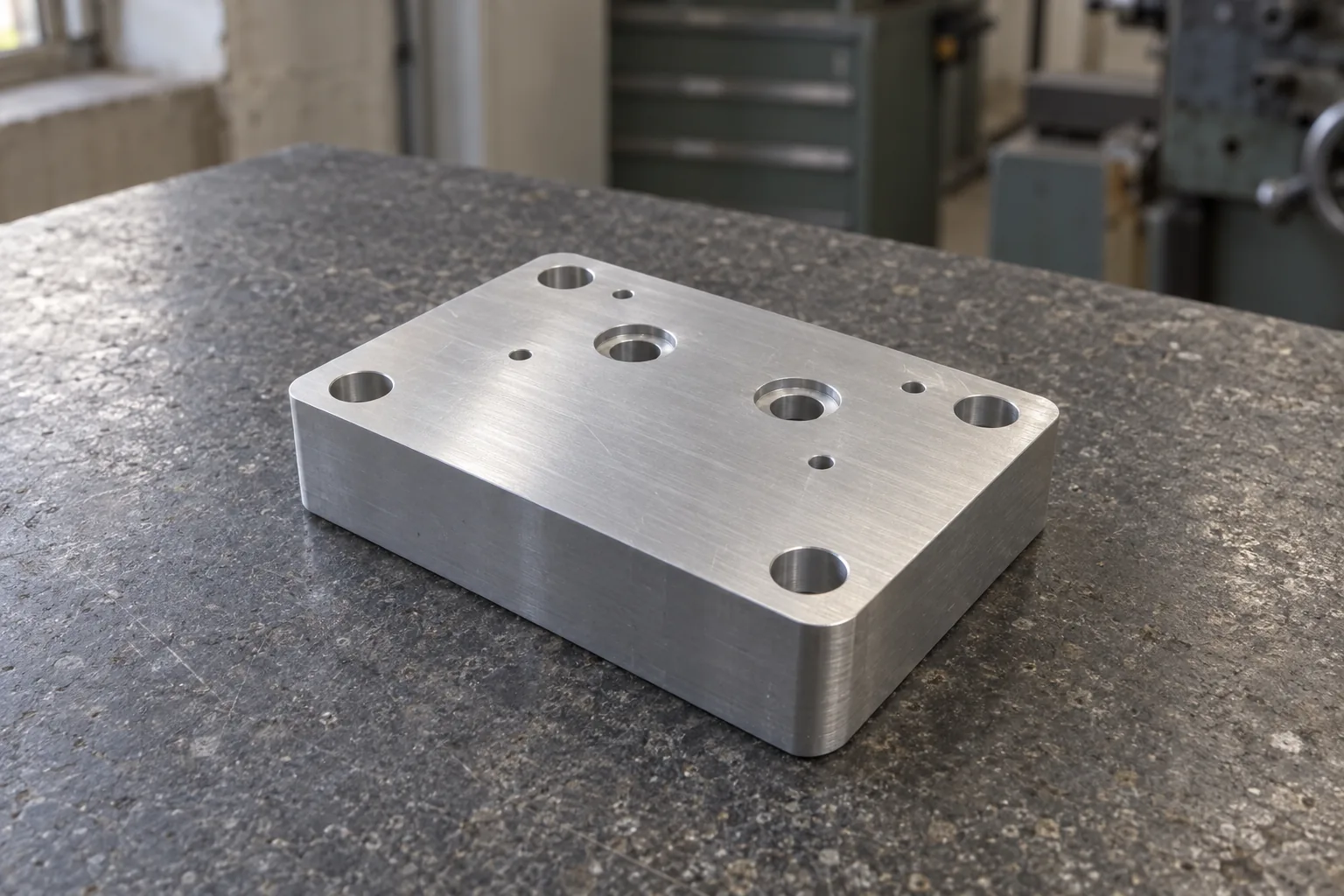
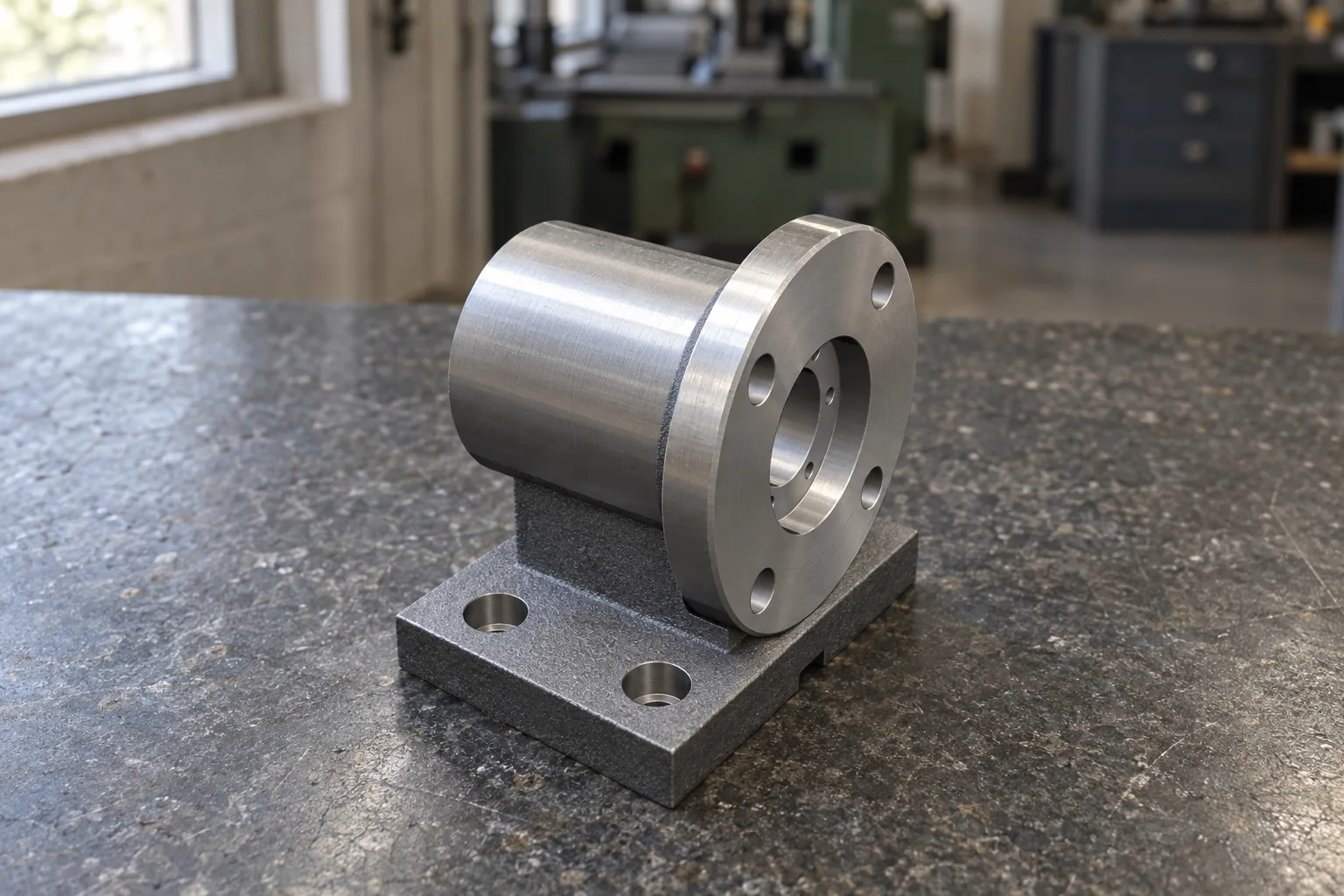
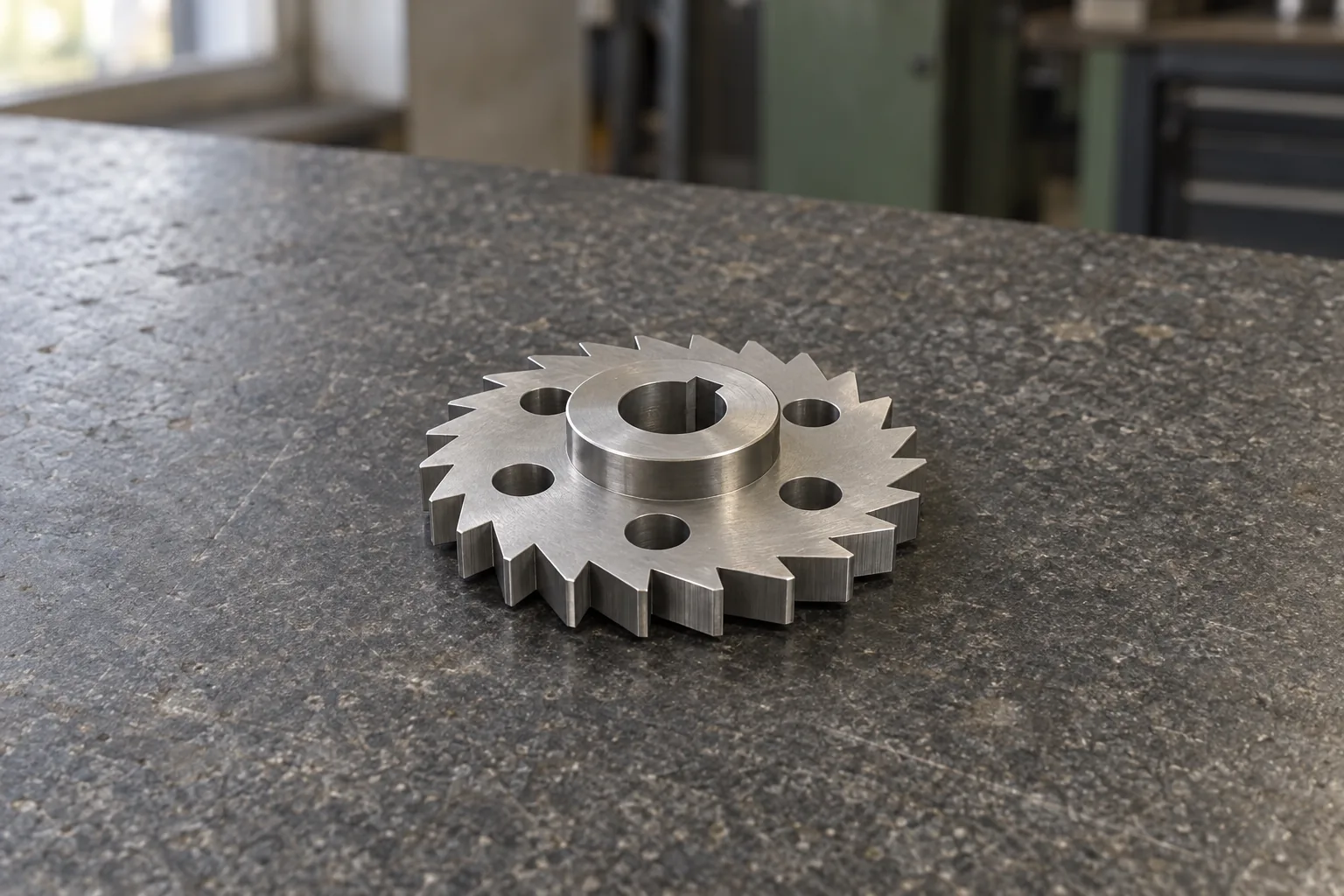
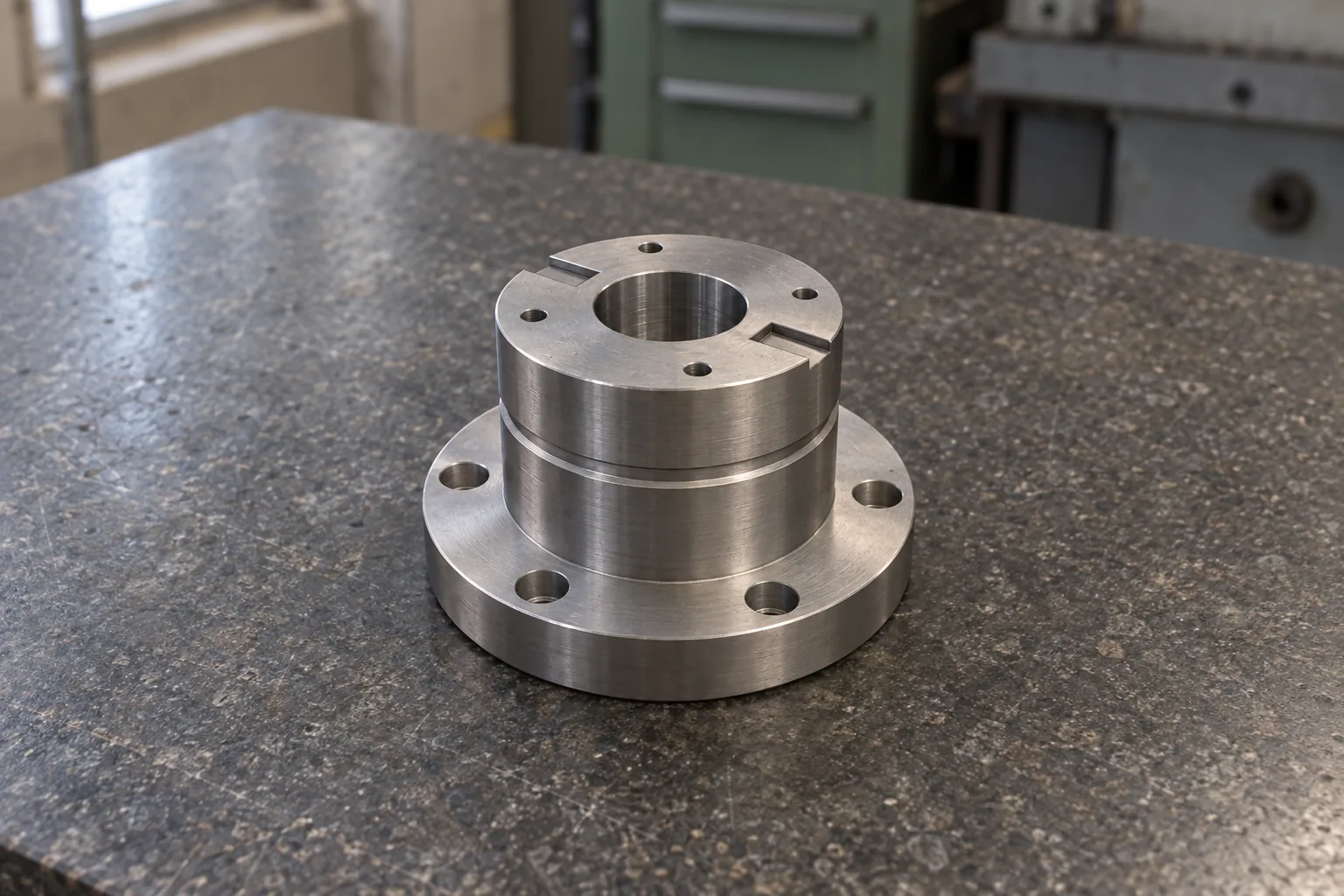
Ported gauge block
From the benchmark · TP-C001
6 views with section A-A · fully specified · a correct reader reads it
A synthetic, company-owned test part from TruePart's fifty-part benchmark, pictured as its drawing specifies it. It has not been built by TruePart or made in a shop.
PDF to STEP: what to know before you convert.
Can TruePart convert any PDF drawing to STEP?
No. It reads a native vector PDF with a text layer: one sheet, one part, millimetres, up to 10 MB. A scanned, raster or multi-sheet PDF is stopped, not guessed at, and the part must be the one family the preview builds: rectangular plates with a centered bore and a hole pattern.
Is the STEP file a mesh or a solid?
An exact B-rep solid that opens in CAD and CAM tools. It carries the geometry, not a feature history. The STL is a triangulated mesh of the same solid.
How is the STEP checked before export?
The built solid’s envelope, volume, hole count, and each hole’s position and diameter are measured against the approved specification, before STEP and STL are exported. Tolerance bands, material and manufacturability are not checked.
Which units does the STEP use?
Millimetres. The preview reads millimetre drawings only, and STEP and STL are both exported in millimetres.
Does an AI model read my PDF?
No. Current public demo: deterministic drawing reader. AI-assisted interpretation: in evaluation, not enabled in this preview. Uploads stay private to your account and go to no AI provider.
Further reading
See PDF to STEP on the demo drawing.
The home page follows a sample drawing through each stage. Pilot participants bring their own drawings.